
Scott Adlerberg has a generous, clear-eyed reconsideration of Tough Guys Don’t Dance up at CrimeReads: “50 Years Later, Reconsidering Norman Mailer’s Wild, Bloody Provincetown Noir”. (The headline’s arithmetic is off — the novel is 42, not 50 — but never mind.)
Adlerberg first met the book through Denis Donoghue’s unfavorable 1984 New York Times review, which complained of “the wretched inadequacy of the novel to the intention it clearly enough avows.” Reading it at last, forty-two years later, Adlerberg argues that the very thing the Times called failure is what makes the book live: its relentless digressiveness, its anecdotes within anecdotes, and its treatment of Provincetown itself as a character. He likens its shape to The Fight, where Mailer’s musings all but swallow the event.
His sharpest move is to relocate the novel’s lineage. For all that it’s filed under hard-boiled crime, Adlerberg finds it closer to Poe than to Hammett or Chandler — “a blend of the grotesque and the arabesque,” séance and severed heads and the divided mind and all. On Mailer’s 1987 film he’s forgiving too: a box-office disaster, yes, Ryan O’Neal’s “Oh man, oh god” and everything, but a “curious artefact” that is unmistakably Mailer’s.
It’s the rare reconsideration that treats Mailer’s genre-mangling as a feature rather than a defect — which is finally the only honest way to read a writer who never met a form, from the war novel to the true-crime epic, that he didn’t try to wrestle out of its own shape.
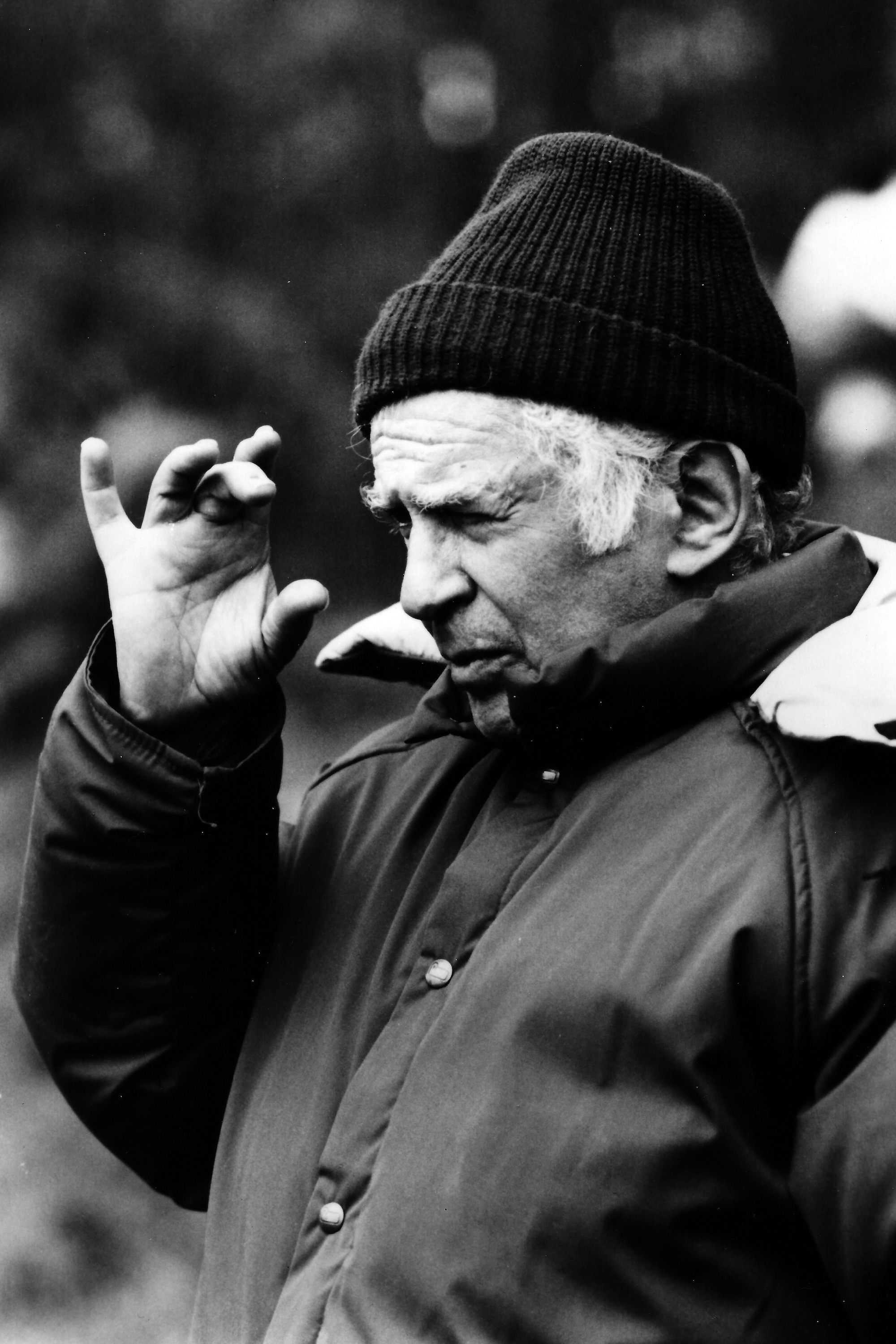
Norman Mailer directing Tough Guys Don’t Dance on location in Provincetown, fall 1986.