In the summer of 2010 J. Michael Lennon answered a letter from Clive James in the Times Literary Supplement about Mailer’s service in the Second World War. Works and Days lists Lennon’s piece as “Mailer’s War,” in the TLS of July 30, 2010 (bibliography 2010). The Society reprinted his letter on August 18:
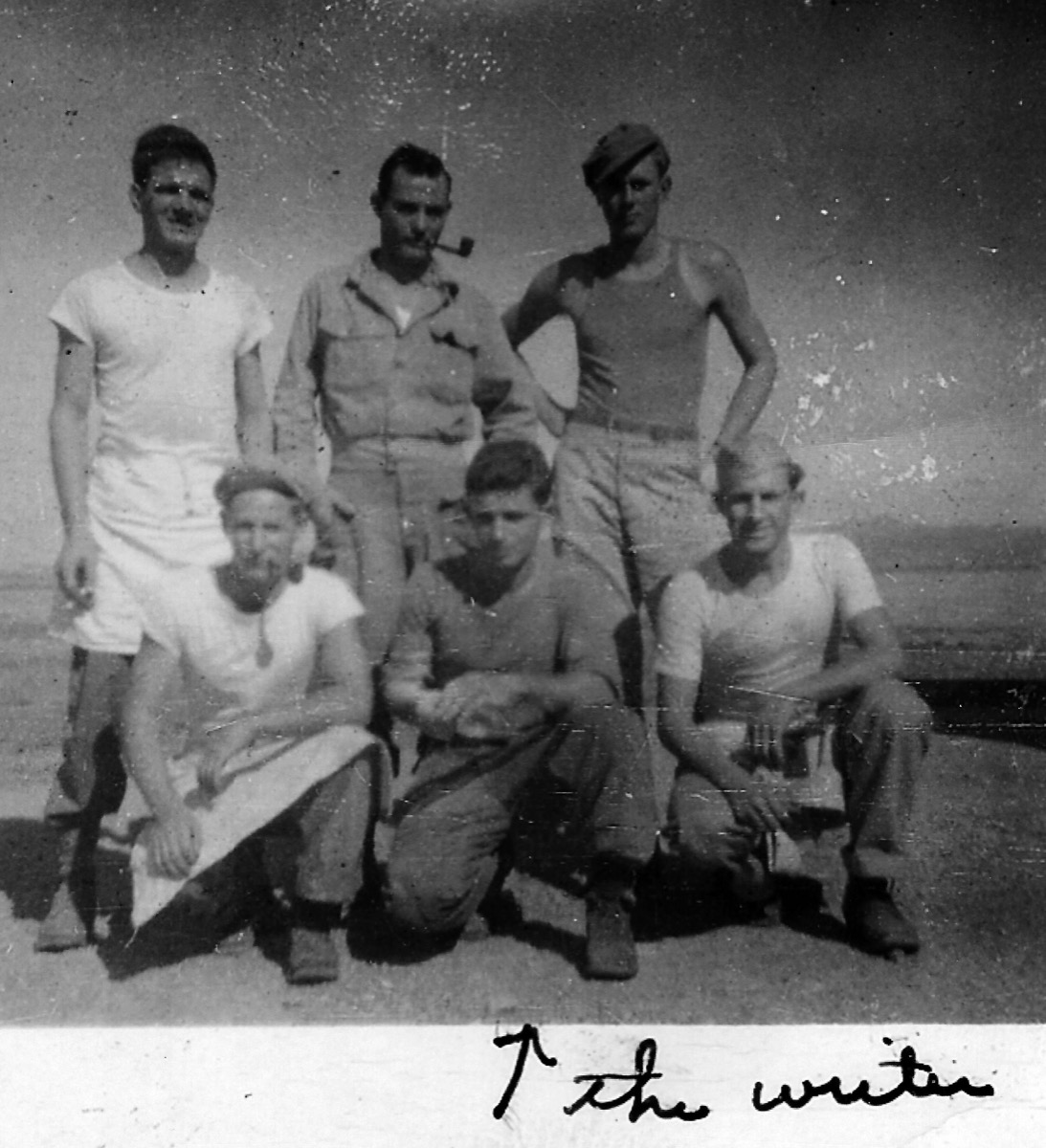
I don’t wish to prolong the discussion about Norman Mailer’s wartime experience, but as his authorized biographer (forthcoming, Simon and Schuster), I believe I can clarify Clive James’s comments on the matter in his recent letter (July 16). During the last year of the Pacific war, Mailer served in several capacities in the 112th Regimental Combat Team, a Texas outfit, during the Luzon campaign of Gen. MacArthur. Trained as an artillery surveyor, he was assigned to regimental headquarters as a clerk, and then worked interpreting aerial photographs, and later on a team laying communication lines. In the spring of 1945, he volunteered for duty as a rifleman in a reconnaissance platoon. Over a three-month period his platoon went on almost daily patrols and was involved in several firefights and skirmishes. He was awarded the combat infantryman’s badge for his service, which he drew on to describe to the long patrol which is the main narrative action in The Naked and the Dead. The attempt of Mailer’s fictional soldiers to climb Mt. Anaka is thwarted when one of them kicks over a hornet’s nest, an event that Mailer had observed. At the war’s conclusion, in August 1945, Mailer went to Japan as part of the occupation force. Bored sitting around the barracks, he volunteered to be a cook. He wanted to know his army from high and low, and was as adept in describing officers planning an attack and he was soldiers slogging up and down hills on 15-mile patrols in no-man’s land. He later wrote a short story, “The Language of Men,” about his work as first cook in Choshi, where he may indeed have served meatballs, as James avers.
James’s letter of July 16 is not in the Society’s records, and we have not seen it.
The record
Works and Days gives the same outline, with a few differences of detail. It has Mailer transferred on January 27, 1945, to the 112th Cavalry Regimental Combat Team on Leyte, serving in the Luzon campaign as a clerk and a wire lineman, and volunteering for the reconnaissance platoon in April. Lennon’s letter calls the unit the 112th Regimental Combat Team and dates his volunteering to the spring. Mailer’s own account, in a 2005 email to Douglas Brinkley about the sale of his archive to Texas, matches Lennon’s “Texas outfit”: he went overseas from an artillery training unit at Fort Bragg to Leyte and the 112th Cavalry, which had been “stripped of their horses,” and there he “learned a good bit about Texas and Texans” (“Mailer’s Miscellany,” New York Times, April 26, 2005; the Society, 2005). After the war, Works and Days adds, Mailer was promoted to Tech 5 and made head cook in occupied Japan, then demoted to private for insubordination shortly before he rotated home in April 1946 (1945).
Mailer told the hornet’s-nest story himself in 2004. His platoon, sent to find a crack platoon of Japanese Marines thought to have slipped through the lines, kicked over the nest near the top of a hill; half the men ran down and half ran up, and the patrol, which had seemed very dangerous at the start, “ended in fiasco.” That was the patrol, he said, that became the several-day patrol of The Naked and the Dead and “got much exaggerated” (Academy of Achievement interview, June 12, 2004).
“The Language of Men” appeared in Esquire in April 1953, the first of more than forty contributions to the magazine. The occupied-Japan kitchen also furnished the setting of “The Paper House” (Works and Days).
The biographer at work
The biography Lennon mentions had gone to Simon & Schuster in 2008, and in 2009 and 2010 its research was turning up in print. He edited four selections of Mailer’s letters in 2009, in Playboy and the New York Review of Books (Works and Days, 2009). In July 2009, working through Mailer’s correspondence of the 1950s at the Ransom Center, he found the only known letter Ernest Hemingway wrote to Mailer, which The Mailer Review first published in its 2010 Mailer and Hemingway issue with Lennon’s essay on it (Works and Days). That June he edited the text of Moonfire, Lawrence Schiller’s illustrated abridgment of Of a Fire on the Moon, and in October he commented on Mailer in Creative Nonfiction (Mailer in the News, 2010).
At the Society’s 2010 conference in Sarasota, on Mailer and Hemingway, Lennon joined Philip Bufithis in a dialogue on the two writers, introduced Robert Begiebing’s play Ernest and Norman: A Dialogue, and gave the Society “The Authorized Biography of Mailer: A Preview” (program).
The biography appeared in October 2013 as Norman Mailer: A Double Life, followed by his Selected Letters of Norman Mailer in 2014. Lennon wrote for the TLS again in 2018, with “The Naked and the Read,” a tour of Mailer’s library, and in 2022 the paper excerpted Lipton’s, Mailer’s marijuana journal of 1954–55, which he co-edited.
In Works and Days
- J. Michael Lennon — Norman Mailer’s authorized biographer, archivist, and close friend; Emeritus Professor of English at Wilkes University.
- The Naked and the Dead — Mailer’s debut novel, a 721-page Pacific-theater war novel published by Rinehart on 6 May 1948, 62 weeks on the New York Times bestseller list, Pulitzer-nominated, and…
- “The Language of Men” — Mailer’s first story for Esquire — drawn from his experience as an Army cook in occupied Japan in 1946 — and, by Lennon’s count, “the first of more than 40…
- 1945 — Leyte, Luzon, the reconnaissance platoon, and the kitchen in occupied Japan.