On April 27, 2014, the Society shared this notice:
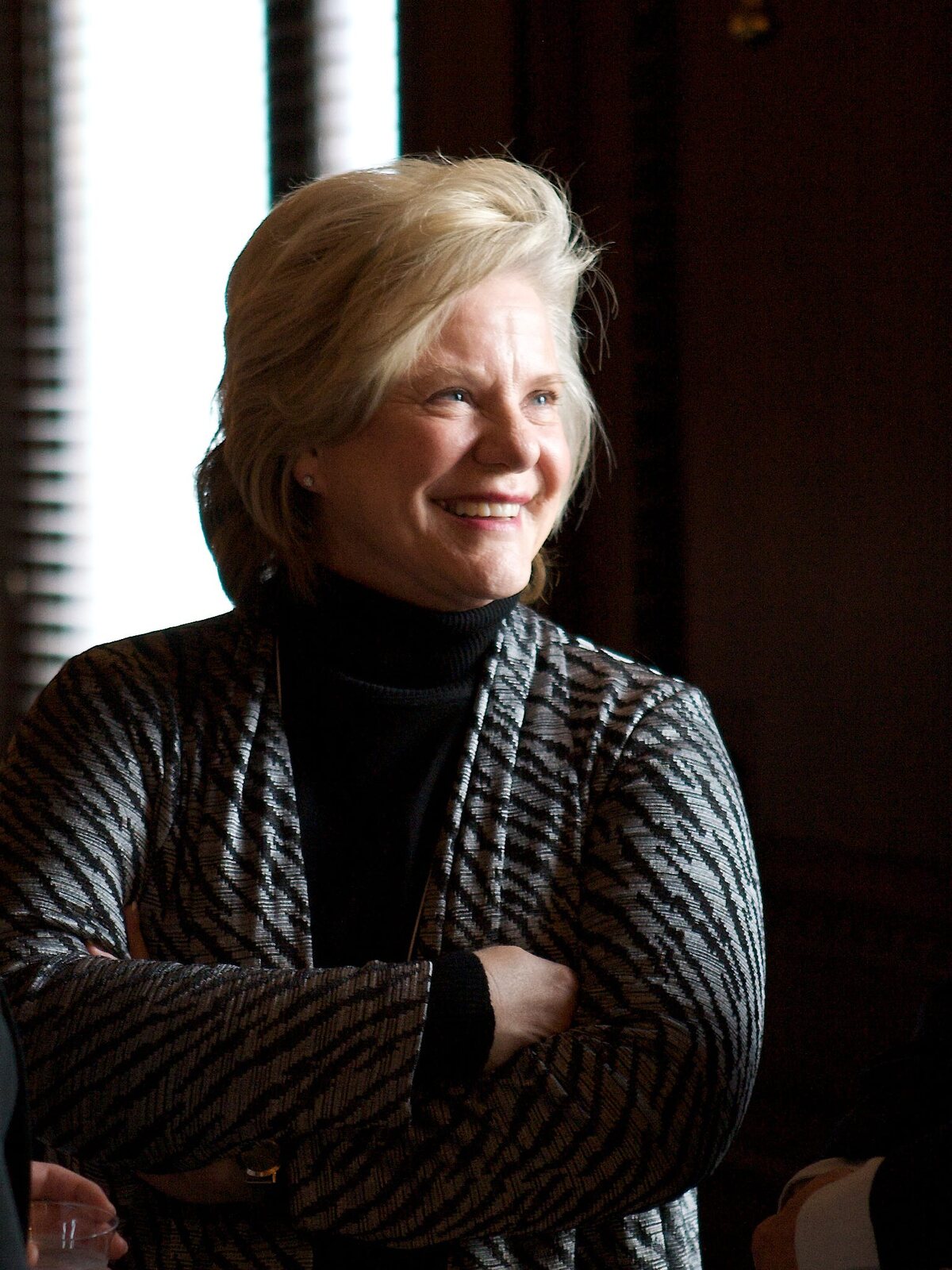
Deborah Martinson, our good friend, NMS Board Member, scholar.
Because I am a doer, I will manage this with as much gentleness and appreciation as I can — and make it work. Because I am a thinker, I resolve to think things through — so many of you I love deserve the best from me, and you give the best to me.
Sadly, Deb passed away at home last night. She requested that if anyone wished, they could make a contribution in her name to any organization doing research on breast cancer, to an animal rights organization, or to help writers.
Deborah Martinson died of cancer at her home in Burbank, California, on Saturday, April 26, 2014. She was 67.
Her life
She was born on May 20, 1946, and grew up in Fillmore, California. She studied at Cal State Chico, took her master’s at Cal State Northridge, and earned her Ph.D. in English literature at USC. She married Barry Martinson in 1970, and they lived in Burbank for more than forty-three years (The Occidental Weekly, April 29, 2014).
She joined the faculty of Occidental College in Los Angeles in 1991. The Society’s conference biographies of 2006 through 2009 list her as associate professor of English writing; by her death she was professor of writing and rhetoric and director of writing programs, and, as the college put it, the founder and force behind the Oxy Writing Network for nineteen years. She won the college’s Tod and Linda White Teaching Prize in 2009, and she kept teaching creative nonfiction through her last semester as her health declined. “She lit up when she entered the classroom,” a colleague said (Occidental College, April 29, 2014).
As a scholar she worked in biography, autobiography, and fiction, and wrote about those she called “complicated women.” In the Presence of Audience: The Self in Diaries and Fiction (2003) took up Virginia Woolf, Katherine Mansfield, Violet Hunt, and Doris Lessing. She researched and collaborated on Phillip Schopper’s PBS biography The Lives of Lillian Hellman, and then wrote her own, Lillian Hellman: A Life with Foxes and Scoundrels (Counterpoint, 2005). Mailer gave Martinson interviews on Hellman for the book; they “provided much interesting and astute material about them both,” she told the Society. “What a pair!” Her life of the Alabama civil-rights leader Virginia Durr, Virginia Durr: Southern Radical Come Hell or High Water, was “recently completed” at her death, according to the college; the student paper listed it among her published titles. She is survived by her husband, Barry, their daughter, Hope, their son, Jay, and four grandchildren.
In the Society
Martinson was a founding member of the Society (2006 conference biographies). At its first conference, in Brooklyn in November 2003, she joined the discussion of the Society’s mission and compared Mailer and Hellman (minutes), and at the 2005 conference she read “Norman Mailer and Lillian Hellman: ‘Half Friendly; Half Chilled.’” There, too, she offered to serve as the Society’s West Coast coordinator, helping students from Southern California make the trip to Provincetown (minutes). She was on the Executive Board by 2006 and served on it until her death—in October 2012 she was among the members who met at the Norman Mailer Center in Provincetown—and she sat on the editorial board of The Mailer Review.
She shaped the conferences for years—a “Mailer conference organizer (multiple times),” as the Review’s editor, Phillip Sipiora, put it. With Sipiora she was program chair in 2007 (minutes) and co-chair in 2008, when she also arranged the speakers for the day of tributes to Mailer on October 16 (Society newsletter, July 2008). She chaired the program for the 2009 conference in Washington, with an Occidental student, Marina Rosenthal, assisting; took proposals with Sipiora for 2010; and with Bonnie Culver coordinated the program for the 2011 joint conference with the James Jones Society in Austin.
She was as often at the lectern. In 2006 she spoke on the panel “The Mailer Legacy”; in 2007 on “Mailer’s Place in the Literary Canon: Everywhere (Almost),” and she moderated the roundtable on The Castle in the Forest; in 2008 on “Sex and God Writ Large” (program); in 2009 she joined the roundtable on the fiftieth anniversary of Advertisements for Myself (program). In 2010, in Sarasota, she spoke on Norris Church Mailer’s memoir, A Ticket to the Circus, and led a writers’ workshop, “Biography/Profile—Writing Another’s Life” (program). In Austin in 2011 she sat on the panel of fellows and faculty of the Norman Mailer Writers Colony, where she had been a summer faculty fellow, and taught a workshop, “Writing Real Stories.” In 2012 the program put her on the roundtable “Mailer and Women: The Prisoner of Sex Revisited” (program), and in 2013, in Sarasota, she spoke on “The Writing Life: More than just The Spooky Art” (program).
In The Mailer Review she wrote “Despite Our Differences” for the 2008 issue, among its tributes to Mailer: she had not always agreed with Mailer, especially on women, but “this feminist reverently mourns the passing of Norman Mailer.” For the 2009 issue she wrote “It Takes a Thief to Know a Thief,” on four biographies of Mailer (The Review, Volume 3; Works and Days, bibliography 2008 and 2009).
Remembered
At the 2014 business meeting, in Wilkes-Barre that October, President Mike Lennon opened by acknowledging the members’ sadness at her passing, and the members elected Lawrence Shainberg to her seat on the Board. In the Review that fall, Sipiora remembered her as a feminist scholar whose approach was rigorous and analytical, and a staunch friend. He quoted Lennon: “She certainly helped me get the right perspective for my Mailer biography” (The Mailer Review 8, 2014). In 2017 the Society’s treasurer, David Light, named her among the people whose stalwart leadership had kept the Society strong for fifteen years.
In Works and Days
- Lillian Hellman, the subject of her biography
- Bibliography, 2008, with “Despite Our Differences”
- Bibliography, 2009, with “It Takes a Thief to Know a Thief: Four Biographies of Norman Mailer”